Today's showrooms are more than just product display spaces. They are where brands meet customers, offer an experiential space, and significantly influence purchasing decisions. In an increasingly competitive environment, businesses are forced to seek new solutions to create a unique selling point and attract attention.
LED showroom screens have emerged as a strategic tool, not only for displaying information but also for shaping the customer experience. Especially in the real estate sector – where products are "intangible" and need to be clearly visualized – LED screens are becoming invaluable tools for sales offices, model homes, and project presentation centers.
This article will help you better understand LED showroom screens, the Digital Showroom trend, and how to effectively apply them in the real estate sector.
(2).png)
Showroom LED screens are large-scale display systems installed in product showrooms, commercial showrooms, project presentation centers, or model homes. Unlike outdoor advertising screens, showroom LED screens are optimized for close viewing distances, typically 2 to 5 meters, with high resolution and accurate color reproduction.
Structurally, LED showroom screens are assembled from many small LED modules, creating a seamless, borderless display surface that can be flexibly customized in size to suit the actual space. LED technology allows for high brightness, wide viewing angles, and stable operation over long periods – crucial factors when operating in a commercial environment.
Many businesses are still using commercial TVs or LCD video walls for their showrooms. However, these solutions have several limitations: the borders between the panels interrupt the content, the brightness is insufficient to prevent glare under showroom lighting, and the lifespan is often shorter compared to LED screens.
LED showroom screens effectively solve these problems while offering enhanced aesthetics thanks to their slim design and seamless integration into the overall architecture.
(1).png)
A digital showroom is a display space model that applies digital technology to the entire customer experience journey. Beyond simply installing LED screens, a digital showroom includes interactive touchscreen systems, virtual reality (VR) and augmented reality (AR) applications, centralized content management software, and other smart display devices.
In this model, the LED screen serves as the central display, where all information about products, brands, and promotions is presented vividly and intuitively. The intelligent control system allows for content synchronization between screens, instant information updates, and personalized experiences for each customer segment.
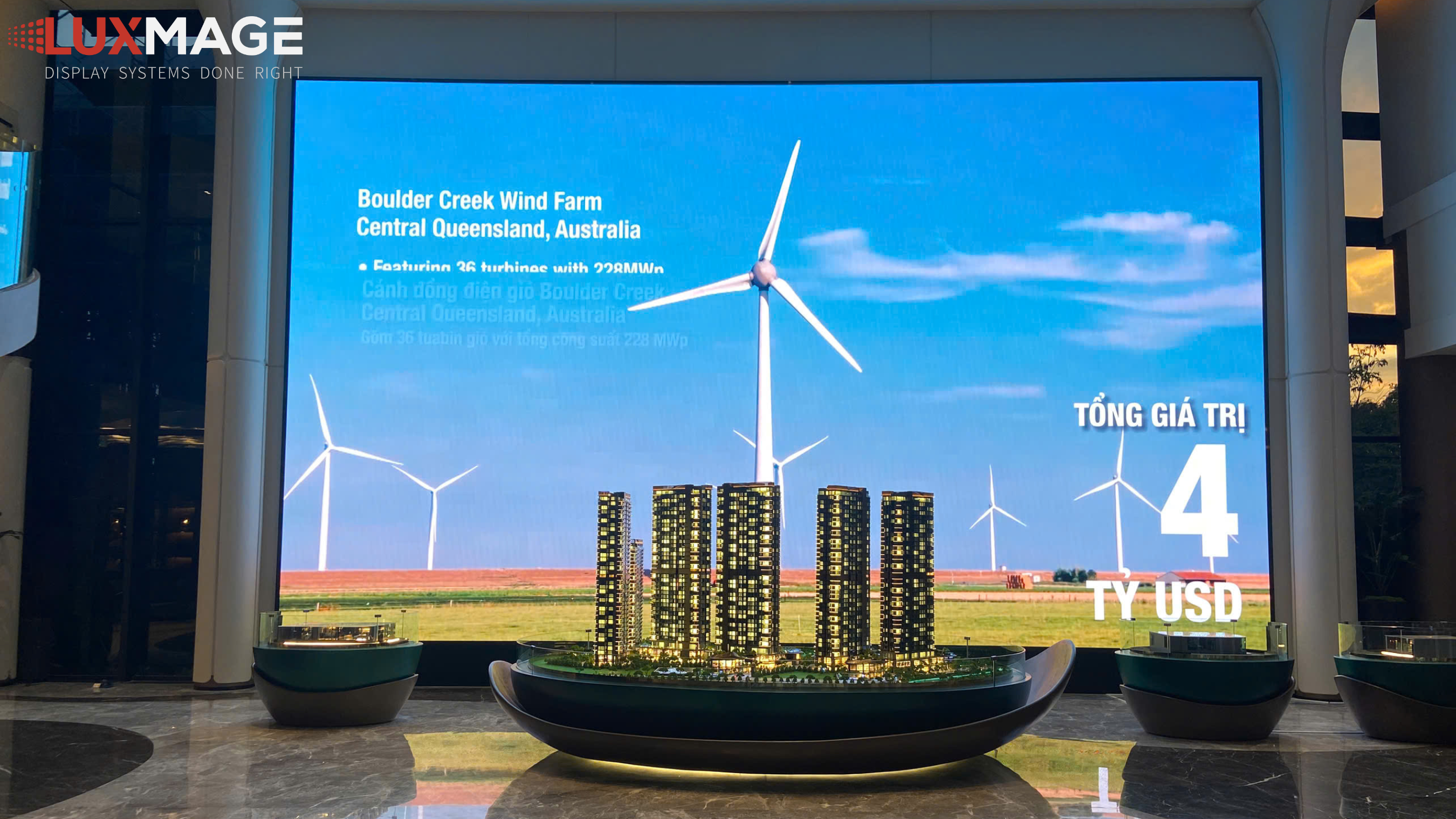
There are three main factors driving this trend:
Firstly, customer behavior is changing. Modern consumers, especially Millennials and Gen Z, are accustomed to accessing information through digital channels. They expect interaction, the ability to independently search for information, and a multi-sensory experience when visiting a showroom. A static display space with brochures and posters can hardly meet these expectations.
Secondly, competitive pressure is increasing. As more and more businesses invest in digital showrooms, failing to keep up with the trend means losing a competitive advantage. A modern showroom with LED screens and high-tech applications creates a professional impression, enhancing brand reputation in the eyes of customers and partners.
Thirdly, it offers superior operational efficiency. With a centralized content management system (CMS), businesses can update promotions, new products, or adjust display content across all showrooms in minutes from a single computer. This significantly reduces printing, shipping, and labor costs compared to traditional methods.
(1).png)
Real estate is a unique sector when it comes to product display. Customers cannot physically touch, feel, or try out the apartment like with other products. They can only visualize it through descriptions, images, videos, and miniature models.
Therefore, the ability to "project" and "recreate" images realistically and vividly is a key factor in determining sales effectiveness. A professional real estate showroom needs to be able to:
LED showroom screens meet all these requirements and offer many other outstanding benefits.
.png)
Developers who have implemented LED display solutions for real estate showrooms have seen many clear benefits:
When choosing LED screens for a showroom, businesses need to consider the following technical requirements:
.png)
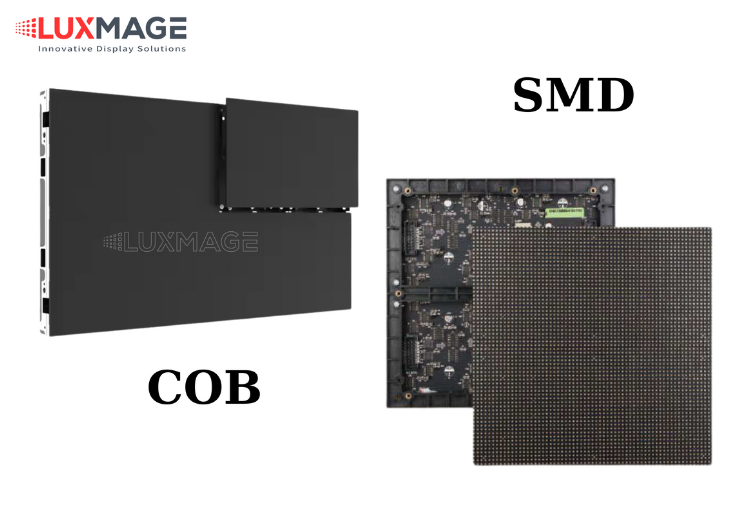
COB LED displays utilize a technology that directly packages chips onto a circuit board, creating a seamless surface that is glare-free, dustproof, and impact-resistant. With a high contrast ratio of up to 20,000:1 and a 170° viewing angle, COB LEDs provide a comfortable visual experience, making them particularly suitable for high-end showrooms and large brand model homes where top-quality images and close viewing distances are required.
SMD LED displays are a popular technology where LED chips are packaged into individual beads and mounted on a surface. Advantages include high brightness, reasonable cost, easy scalability, and quick maintenance. This product line is suitable for showrooms with tight budgets, large spaces, and longer viewing distances.
The article "Differences Between COB LEDs and SMD LEDs" on the Luxmage website provides a detailed comparison table to help businesses easily choose the technology that best suits their needs and budget.
With experience in implementing numerous LED display projects nationwide, Luxmage understands the specific requirements of real estate showrooms and commercial display spaces.
The Luxmage team not only provides equipment but also offers comprehensive solutions, from site survey and technology selection to integrated architectural design, installation, and handover. The integrated intelligent control system and CMS content management software enable businesses to easily operate and update information across all screens.
Luxmage's completed projects, such as the LED Digital Display System for Meeting Rooms at VIB Bank and the LED Conference Screen for the International School in District 7, demonstrate its capability to deploy high-quality display solutions in diverse environments.
LED showroom displays are no longer a luxury option but are becoming the new standard for professional display spaces. Especially in the real estate sector, where visualizing the product plays a crucial role, investing in a modern display system is a strategic move that helps businesses enhance their competitiveness and optimize business efficiency.
A digital showroom with LED screens as its centerpiece not only makes a strong impression on customers but also delivers superior operational efficiency, long-term cost savings, and strengthens the brand's position in the market.
If your business is planning to upgrade or build a new showroom, contact Luxmage for advice on the most suitable solution.
Contact us at:
Luxage Technology Co., Ltd.
Address: 63 Lo Lu Street, Truong Thanh Ward, Thu Duc District, Ho Chi Minh City
Hotline: 0988.895.066 - 093.333.5066
Email: sale@luxmage.com
Hot news
Project Reference

Posted by: Admin - Date: 11-03-2026
Last Page: Enterprise Display Solutions| From Standalone LED Screens to Centralized Operation Systems
Next Page: Conference Room Digital System | What LED Screen Brings to Your Business


