Integrated Display Solutions for Digital Showrooms | LUXMAGE
An effective digital showroom requires more than high-quality display screens. More importantly, the system must help visitors understand the business, products, or projects being presented; enable presenters to communicate information efficiently; and make content updates and system management easy throughout daily operation.
From corporate showrooms and industrial park exhibition centers to real estate sales galleries, each space has different presentation objectives and operational requirements.
LUXMAGE provides integrated display solutions for digital showrooms, combining consultation, display technology selection, system design, control integration, and technical implementation tailored to the actual needs of each project.
Rather than focusing solely on individual display screens, we consider how different display areas work together in terms of visuals, content, operation, installation conditions, and maintenance.
LUXMAGE — Commercial Display Systems Done Right.
1. What Types of Projects Are Suitable for Digital Showrooms?
Digital showroom solutions are suitable for spaces that need to present extensive information, frequently update content, or combine multiple presentation formats within a unified visitor experience.
Depending on the intended application, the display system can be configured in different ways.
Industrial Park Showrooms and Investment Promotion Centers
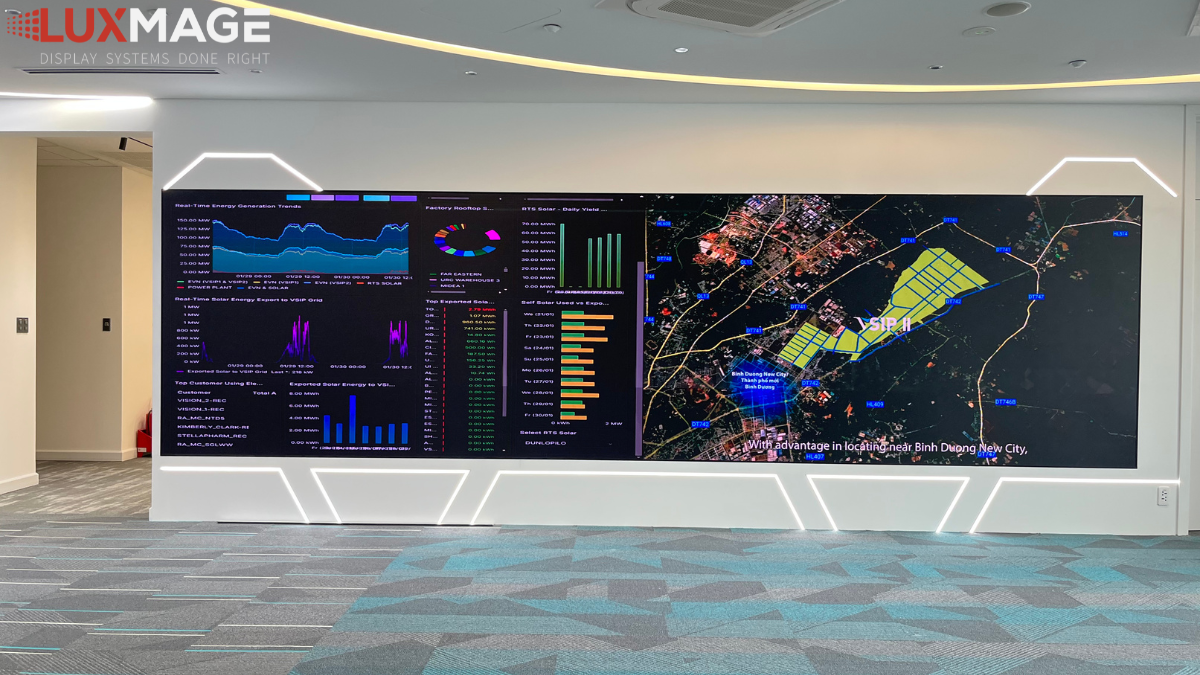
Industrial park developers often need to present location information, master planning, technical infrastructure, transportation networks, amenities, and the investment advantages of different areas.
Instead of relying solely on maps or static models, a showroom can integrate high-resolution LED displays, digital scale models, and 3D visual content to support presentations.
When multiple industrial parks need to be introduced, the system can be designed to allow presenters to select and switch between prepared content according to the needs of different investor groups.
Real Estate Sales Showrooms
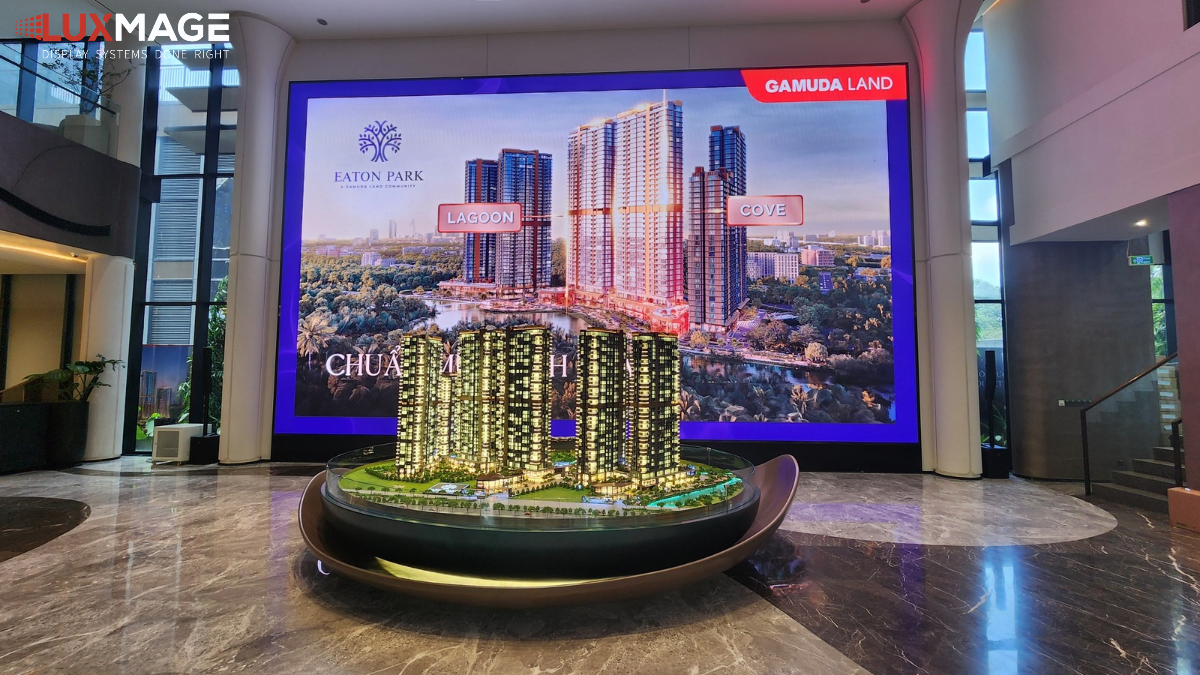
In real estate sales galleries, customers need an overview of the development before exploring specific locations, floor plans, amenities, and property units.
The display system can combine a main screen, physical scale models, project introduction videos, and consultation displays, allowing sales representatives to present information in stages throughout the consultation process.
The goal is not to install as many screens as possible, but to select the right presentation format for each type of content.
Corporate Showrooms and Product Experience Centers
For manufacturers, corporations, and headquarters, showrooms are often used to introduce brand identity, production capabilities, products, technologies, and representative projects.
Each area can combine physical products with images, videos, or interactive information. Visitors can observe actual products while accessing relevant information directly at the display area.
Brand Experience Spaces and Banking Environments
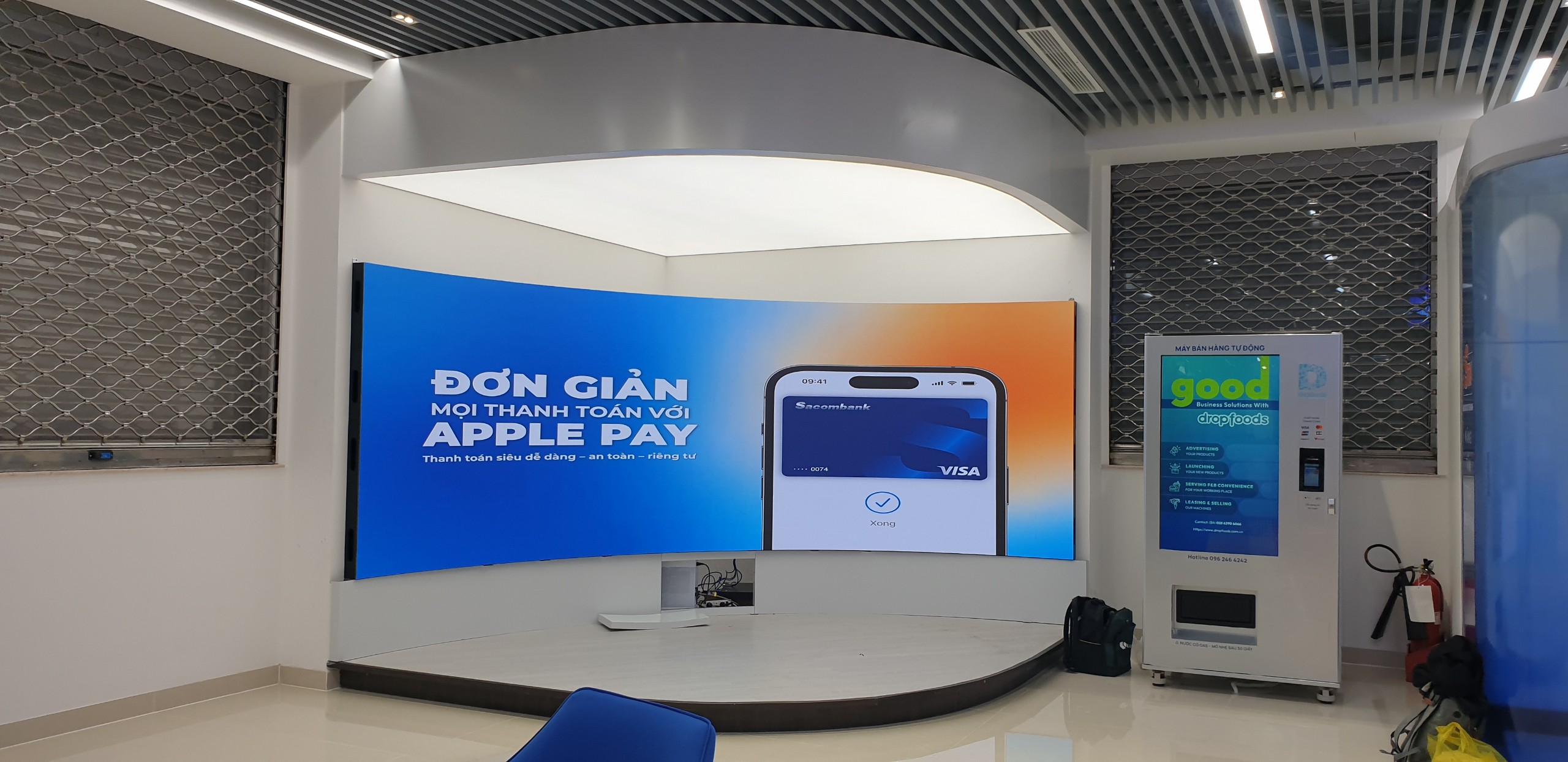
In spaces with extensive glass surfaces or demanding architectural requirements, transparent LED displays and interactive displays can be considered to communicate content while taking the characteristics of the space into account.
Solutions should be designed around communication objectives, viewing positions, ambient lighting, and integration with the existing interior design.
Not every showroom requires a complex system. For smaller spaces with content that changes infrequently, a single primary display area may be a more suitable option. The level of integration should be determined by actual usage requirements and future development plans.
2. Why Does a Showroom Need a Well-Planned, Integrated Display System?
A showroom may contain multiple screens without necessarily having an effective integrated display system.
For example, the reception screen may continuously play brand videos, the product exhibition area may operate independently, the main screen may display only fixed content, and the meeting room may use a completely separate control system.
Each device may function properly on its own, yet users may still encounter difficulties when updating information, switching content, or delivering a seamless presentation.
Therefore, LUXMAGE begins the showroom display system design process by addressing practical questions:
-
Who are the visitors, and what information do they need to understand?
-
Which areas will visitors be guided through?
-
Which content needs to be displayed independently, and which requires coordination across multiple screens?
-
Who will be responsible for system operation, content updates, and equipment management?
-
After the showroom tour, will visitors continue discussions in a consultation area or meeting room?
Based on these requirements, the system is divided into functional zones, with appropriate configurations selected for each area.
The value of integrated design does not lie in the number of devices installed, but in how effectively the space, visuals, content, and user operations work together.
3. Key Components of a Digital Showroom Display System
3.1. Professional Display Screens
Display screens are the primary medium for communicating information to visitors. However, each area has different requirements in terms of screen size, viewing distance, resolution, brightness, and installation method.
Depending on the project, LUXMAGE may select high-resolution COB LED displays, transparent LED displays, curved displays, or customized display configurations.
For areas where visitors need to view content at close range, read drawings and documents, or examine product details, display quality must be evaluated based on the actual content being presented.
COB technology is an important option for indoor environments requiring sharp images, a uniform display surface, and reduced reflection effects.
However, not every area requires the same display technology. Product selection should be based on the intended function, installation environment, and investment budget of each location.
3.2. Main Displays and Presentation Systems
The main display typically serves as the primary platform for introducing an overview of the company or project.
For larger spaces, displays can be designed in flat, curved, multi-sided configurations, or integrated with the surrounding architecture.
Beyond image quality, the design must also consider presenter positioning, visitor viewing angles, content aspect ratios, and the ability to use multiple presentation sources.
A high-resolution screen can only deliver its full value when the content and operating methods are properly prepared.
3.3. Digital Scale Models and 3D Visualization Content
Digital scale models provide an intuitive way to present spatial information, master planning, locations, and relationships between different areas.
In industrial park or real estate showrooms, digital scale models can be integrated with main displays to present 3D content, planning information, and key highlights during presentations.
The shape and dimensions of a scale model should be appropriate for the available space, viewing positions, and the way visitors gather around it.
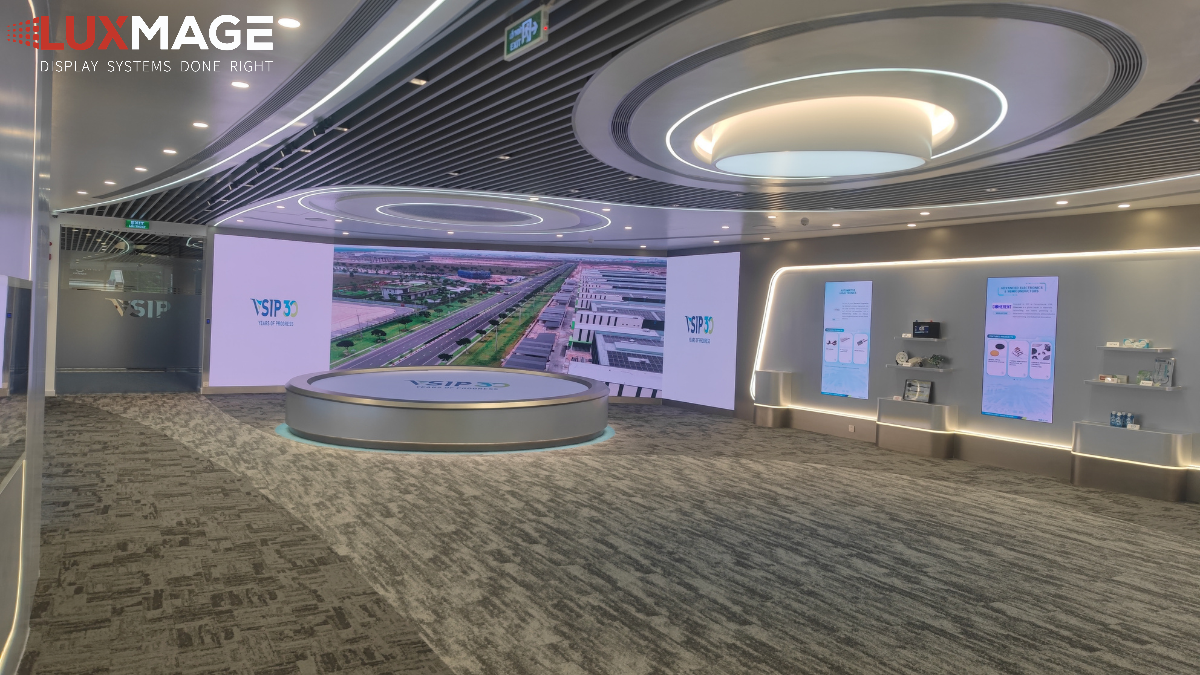
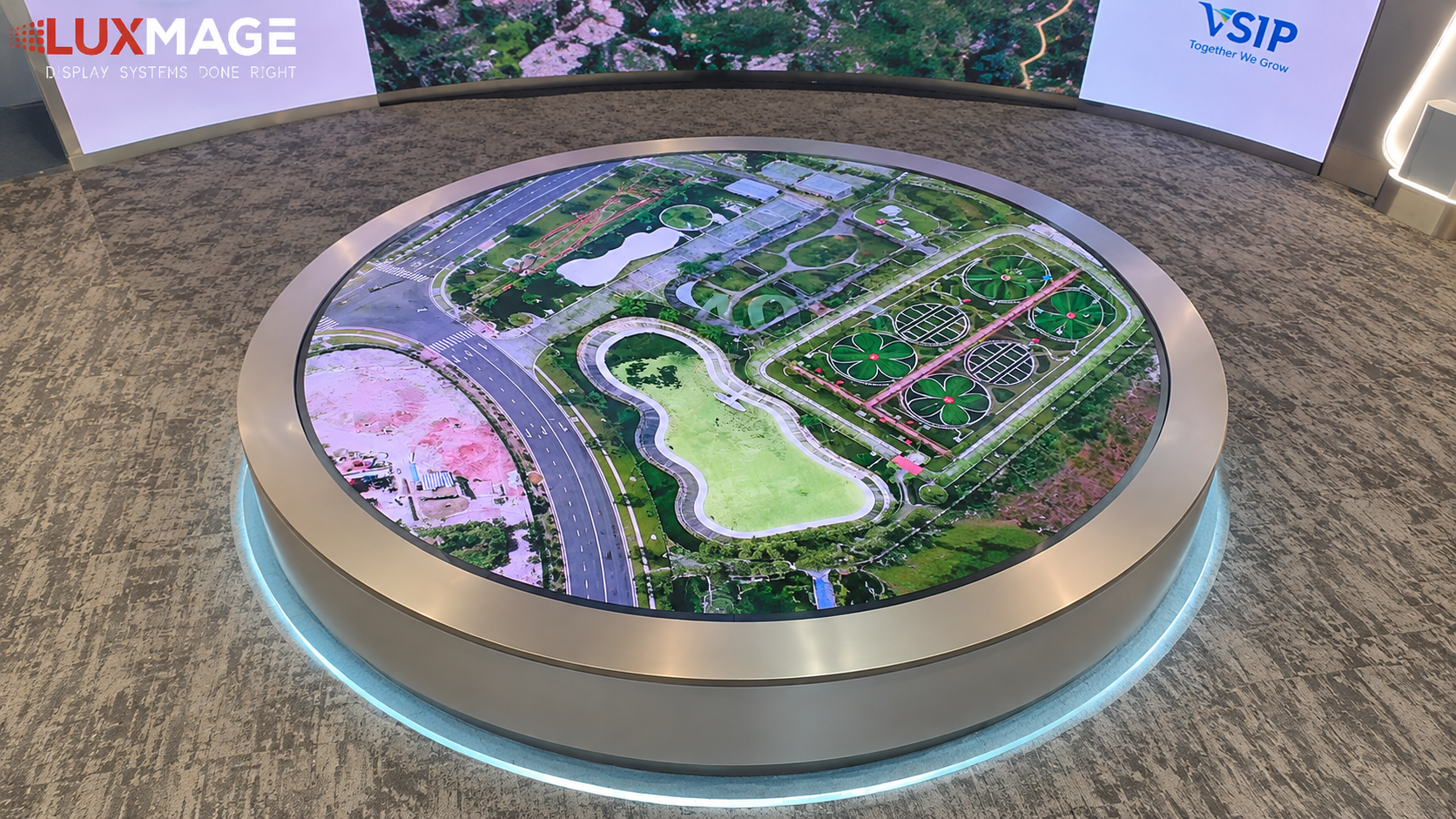
For specialized designs, such as circular LED digital scale models, the solution must simultaneously address display quality, structural design, bezel dimensions, installation requirements, and maintenance accessibility.
This approach was implemented by LUXMAGE in the VSIP showroom project.
3.4. Content Management and Display Control Systems
In a showroom with multiple display areas, content management and presentation control are two distinct requirements that need to be considered separately.
Centralized content management enables designated staff to update, organize, and schedule content across displays according to the system's designed functional scope.
Presentation control and visual synchronization support presenters when selecting content, switching scenes, or coordinating visuals between the main display and related screens.
Not all screens need to operate in synchronization, and not every system requires a single unified control software platform.
LUXMAGE determines management functions based on the number of devices, operational requirements, and selected software solutions, with the goal of establishing a clear operating workflow suited to the customer's actual personnel and capabilities.
3.5. Meeting Room Display and AV Systems
For many corporate showrooms, the visitor experience does not end in the exhibition area. After the tour, visitors often continue discussions in a meeting room.
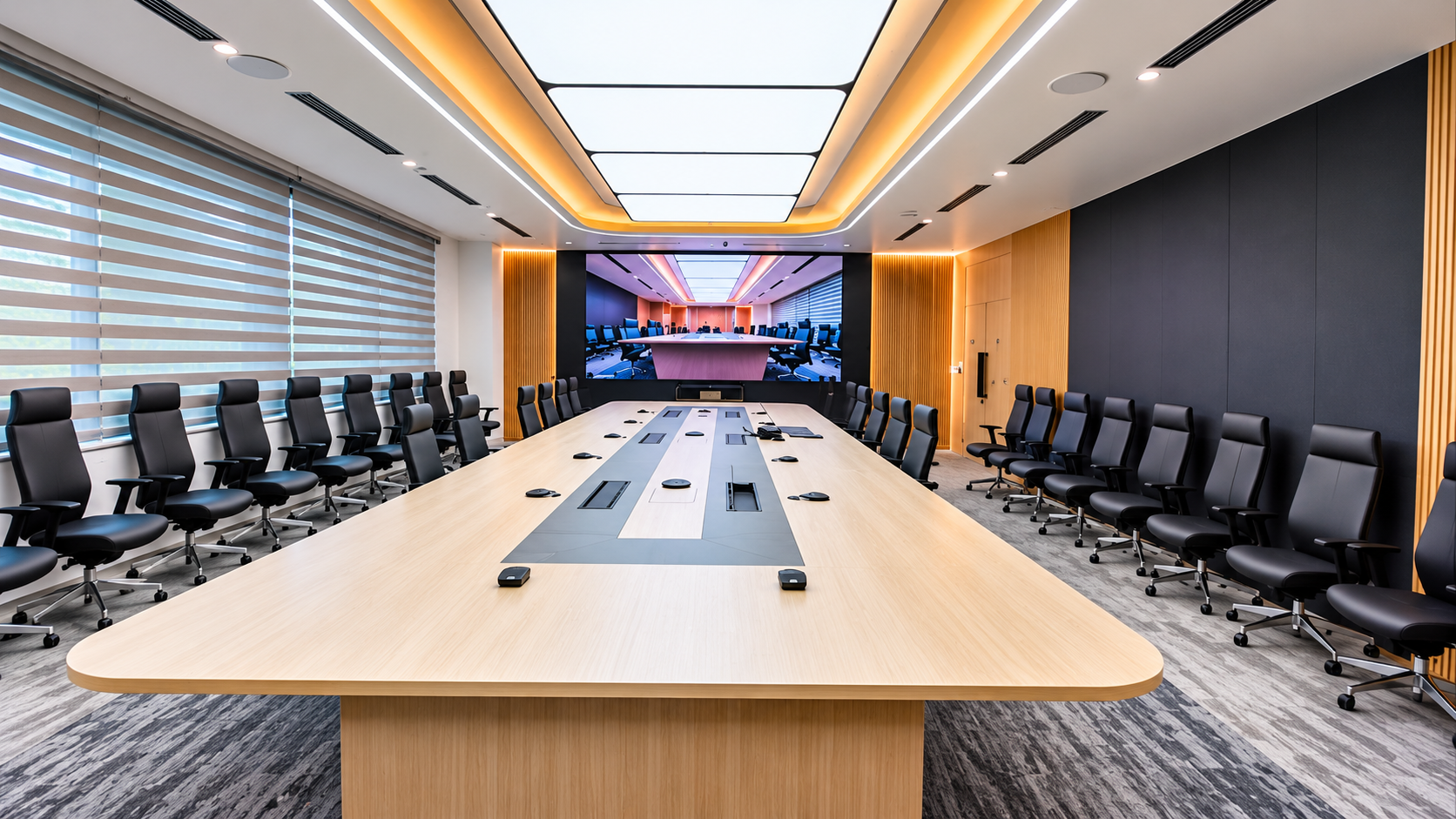
Depending on project requirements, the system can integrate high-resolution LED displays, wireless presentation solutions, video conferencing equipment, and audio systems for meetings and discussions.
The key is to ensure that all equipment works effectively within the meeting workflow, allowing users to present documents, exchange information, and switch conveniently between in-person and online meetings.
4. Display System Design Must Consider Space Conditions and Technical Infrastructure
A showroom LED display solution cannot be determined solely by reviewing a visual rendering.
The design must be evaluated under actual site conditions, particularly for large displays, specialized screen configurations, or systems intended for extended operating hours.
Space Planning and Installation Structures
When determining screen locations, key considerations include viewing distance, viewing angles, ambient lighting, and integration with the architecture.
For wall-recessed displays, multi-sided screens, or digital scale models, installation space and maintenance access must be determined in advance.
These requirements should be discussed during the interior design stage rather than addressed after construction has been completed.
Power Supply and Electrical Distribution
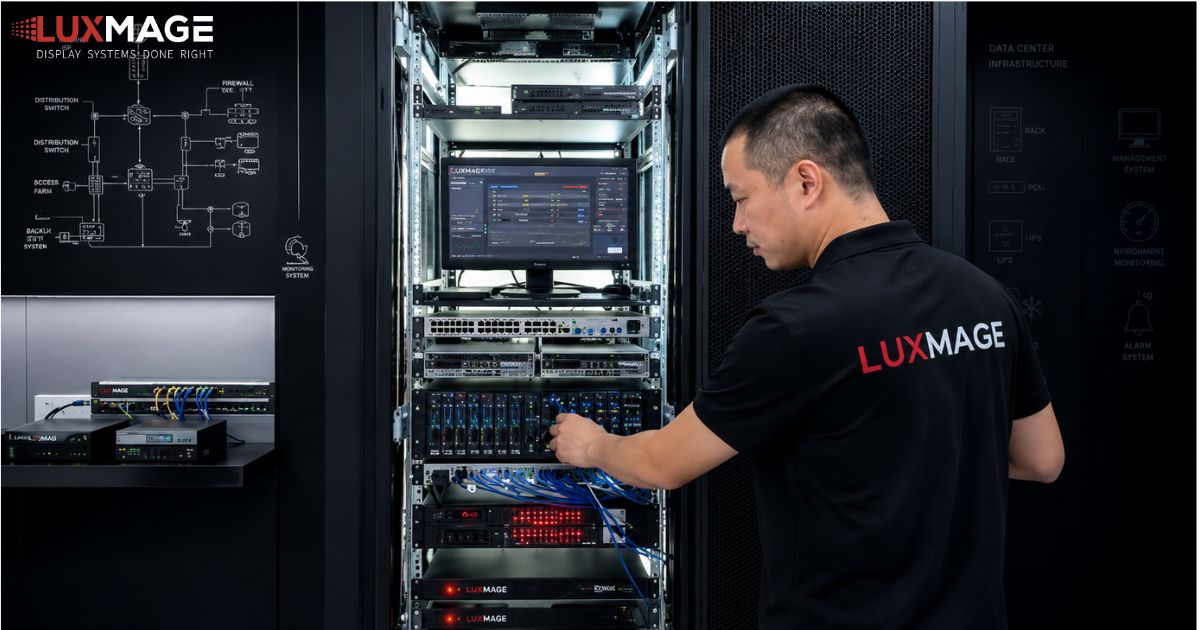
LED displays, control equipment, audio systems, and related devices all have specific power requirements.
LUXMAGE provides information on system power loads and power supply requirements to coordinate with project owners and MEP design contractors.
Evaluating power supply conditions, electrical protection, and future expansion capabilities in advance helps ensure that the infrastructure is properly prepared for the selected system configuration.
Air Conditioning and Equipment Heat Dissipation
Display systems generate heat during operation. For installations involving large screens, enclosed digital scale model compartments, or equipment cabinets, ventilation and heat dissipation must be considered from the beginning.
In addition to equipment heat output, the overall cooling requirements of a showroom are influenced by floor area, occupancy, lighting, architectural design, and operating hours.
LUXMAGE provides technical requirements concerning equipment heat output and installation conditions to coordinate with the air conditioning system contractor.
The scope of MEP and air conditioning design and installation is clearly defined among the relevant parties in accordance with the project contract.
A well-designed display system should not only look impressive at project handover but also meet the requirements for long-term operation.
5. From Design to Handover How Does LUXMAGE Implement a Display System?
For digital showroom projects, LUXMAGE follows an integrated approach combining solution design, product selection, technical integration, and on-site implementation.
Site Survey and Requirement Assessment
First, both parties clarify the exhibition objectives, intended users, content requirements, spatial conditions, project timeline, and estimated budget.
The site survey helps identify limitations related to structural conditions, electrical systems, air conditioning, installation requirements, and system operation.
Solution Design and Technology Selection
Based on the agreed requirements, LUXMAGE proposes the display system layout and selects suitable technologies, dimensions, resolutions, and control functions.
For specialized installation locations, the technical team also evaluates structural solutions and maintenance arrangements during the design process.
Product Preparation and System Testing
Equipment configurations are prepared according to the approved design. Items within LUXMAGE's manufacturing, assembly, and testing scope are inspected before being delivered to the project site.
Testing focuses on display quality, system configuration, and the agreed functional requirements.
On-site Installation and System Integration
Implementation requires coordination with interior design contractors, MEP contractors, and relevant content and software providers.
After installation, the technical team checks image quality, presentation functions, control operations, and the coordination between devices within the agreed project scope.
Acceptance, User Training, and Technical Support
Project handover involves more than simply checking whether the screens are working.
Operators need guidance on system operation, content updates, presentation mode switching, and how to contact technical support when necessary.
Documentation, warranty coverage, and maintenance responsibilities are determined according to the configuration and contract of each project.
6. Real-world Projects Demonstrating LUXMAGE's Integrated System Capabilities
LUXMAGE has implemented display solutions for various commercial spaces in Vietnam. Each project below demonstrates a different application of professional display systems.
VSIP – Integrated Multi-zone Digital Showroom
In the VSIP showroom project, the display system was organized around the visitor reception and industrial park presentation process.
At the reception area, COB displays are used to introduce the brand and provide visitor information. The product exhibition area combines displays with dedicated company presentation counters.
The central highlight is a circular COB LED digital scale model, integrated with a three-sided main LED display and a visual presentation platform. The system supports presenters in introducing industrial park information through prepared content.
In addition, the meeting room is equipped with an integrated display solution and supporting devices for presentations, discussions, and video conferencing.
The project demonstrates how LUXMAGE combines COB technology, specialized display design, content management, and system integration within a unified operational environment.
Explore the VSIP Showroom Project
EATON PARK – Display System for a Real Estate Sales Gallery
In the EATON PARK project showroom, an 8K-resolution COB LED display is used to present large-scale real estate visuals and project content.
The display system supports project presentations and complements visitor reception and sales consultation activities.
This project illustrates that the requirements of a real estate showroom go beyond screen resolution. They also involve coordinating display equipment with the space and the content needed to support customer engagement.
Explore the EATON PARK Project
VSIP – Saigon Marina IFC: Display Solutions for Corporate Spaces
At Saigon Marina IFC, LUXMAGE implemented COB LED display installations for the lobby and meeting room areas.
Corporate reception spaces require clear visuals, layouts that complement the architecture, and the ability to present brand content effectively.
Meanwhile, meeting rooms prioritize the display of documents, discussion materials, and support for meeting activities.
The project demonstrates how the same display technology can be configured for different purposes within a corporate office environment.
Explore COB P1.53 LED Screen at VSIP District 1
Explore COB P1.53 LED Display for Meeting Room | Project at VSIP District 1
SACOMBANK – Transparent Display and Interactive Experiences
For the implemented SACOMBANK project installations, LUXMAGE applied transparent LED displays and interactive display solutions in a banking environment.
These applications require coordination between displayed content, viewer experience, and the architectural characteristics of the installation areas.
For spaces with extensive glass surfaces or requirements to preserve visibility, transparent display technology provides an alternative to conventional LED displays.
Explore the SACOMBANK Interactive Display Project
Explore the Transparent LED Applications at SACOMBANK
These four project groups serve different purposes but share one essential requirement: display technology must support the actual function of the space and the way customers use it.
7. Key Factors to Consider Before Investing in a Digital Showroom
The cost of a digital showroom system depends on multiple factors, not simply the display area or unit price of the equipment.
Key factors include space dimensions, display technology, resolution, installation structures, control functions, visual content, software, supporting equipment, and actual implementation requirements.
For projects involving multiple areas, it is advisable to identify which components need to be implemented immediately and which can be reserved for future expansion.
When comparing proposals, project owners and consultants should clarify the supply scope, operational features, infrastructure requirements, integration work, software content, and post-handover responsibilities.
A lower quotation does not necessarily cover the same scope of work. Conversely, a system with more features is not necessarily more suitable if users do not need those functions.
Choosing the right solution means balancing exhibition objectives, technical requirements, user experience, and total investment and operating costs.
8. Frequently Asked Questions
Does the entire showroom need to use COB LED displays?
Not necessarily. COB technology is suitable for many indoor display applications requiring high image quality and close viewing distances. Other areas can use display technologies that better match their intended functions and installation conditions.
Can a display system be added to a showroom that already has an interior design?
Yes, this can be considered, but existing conditions must be assessed, including dimensions, installation locations, structural conditions, power supply, heat dissipation, and maintenance accessibility. Some areas may require adjustments to ensure proper operating conditions.
Can content across multiple screens be managed from a single location?
Yes, provided the system is configured with appropriate centralized management functions. The management scope, playback scheduling, and coordination capabilities between screens must be defined in the technical proposal.
Does LUXMAGE handle the entire interior design and 3D content production?
LUXMAGE focuses on consulting, designing, and implementing professional display systems. Interior design, 3D content production, application software, and building MEP systems are defined according to the agreed project scope, in coordination with relevant specialized contractors.
Can we discuss a solution if the project drawings are not yet finalized?
Yes. Project owners can provide preliminary floor plans, current site photos, exhibition objectives, expected content, and the desired showroom completion timeline.
Based on this initial information, LUXMAGE can discuss display system directions, identify technical conditions that require further clarification, and determine an appropriate consulting scope.
9. Discuss Your Digital Showroom Project with LUXMAGE
If your business is planning to build or upgrade a digital showroom, discussing the display system during the design stage can help ensure better coordination between content, spatial planning, and technical infrastructure.
To get started, you can share the information currently available:
-
Intended application: Corporate showroom, industrial park, real estate, or brand experience space.
-
Floor plan information: Preliminary drawings, current site photos, dimensions, and proposed display installation locations.
-
Exhibition content: Images, videos, documents, 3D data, or desired interactive functions.
-
Project plan: Current design stage, expected operational date, budget, and contractors or partners responsible for implementation.
There is no need to prepare all documentation at the initial stage. Any missing information can be clarified during further discussions and the site survey.
LUXMAGE will work with you to assess display requirements, select suitable technical solutions, and define the appropriate project scope before implementation.
Contact LUXMAGE and Visit Our Factory
LUXMAGE's factory is located in Ho Chi Minh City, Vietnam. We warmly welcome project owners, architects, design consultants, technical contractors, and partners to visit our factory, explore our products, and learn more about our manufacturing processes and system integration capabilities.
Contact LUXMAGE to discuss your project requirements with our technical team or arrange a factory visit.


